
Work Stress Management Milwaukee: Reclaim Balance in 2026
2026-07-18 · Solace Grove Behavioral Health

If you are searching for work stress management Milwaukee resources, you know the pressure is real, but so are the solutions. This article offers a dual-action plan for professionals in the Milwaukee metro area who feel the weight of high expectations, tight deadlines, and the constant hum of workplace demands. You will learn immediate, evidence-based techniques to reduce stress during the workday and gain a clear, curated map of the best local mental health resources available in 2026. The goal is not to eliminate pressure entirely, which is an unavoidable part of any ambitious career, but to build a set of skills that prevents that pressure from hardening into chronic exhaustion. We will cover self-assessment, quick de-stress tactics, cognitive strategies rooted in proven therapeutic frameworks, and guidance on when and how to engage Milwaukee clinics and support networks.
Table of Contents
- Why Milwaukee Professionals Are Feeling the Squeeze (And How to Spot It)
- 5 Immediate Techniques to Destress During the Workday
- Understanding the “5 C’s” of Stress Management for Work
- When Self-Help Isn’t Enough: Choosing the Right Therapy for Work Stress
- Your 2026 Guide to Work Stress Management Milwaukee Resources
- Preventing Burnout: A Long-Term Strategy for the Milwaukee Worker
- Frequently Asked Questions About Work Stress Management Milwaukee
- Final Takeaway
Why Milwaukee Professionals Are Feeling the Squeeze (And How to Spot It)
Milwaukee’s economy runs on industries that demand precision and endurance. Healthcare systems, advanced manufacturing floors, and financial services firms anchor the region, and the people who work in these fields often carry a quiet burden of sustained responsibility. The difference between healthy pressure and chronic stress lies in recovery. Acute stress is the short-term jolt that helps you meet a deadline or deliver a presentation. It spikes and then fades. Chronic stress, by contrast, settles into the body and mind like a low-grade fever that never breaks. Sleep suffers, irritability rises, and the boundary between work and self begins to dissolve.

Ask yourself these three questions. First, do you feel mentally exhausted before the workday even begins? Second, have you noticed a persistent cynicism or detachment toward tasks you once cared about? Third, are physical symptoms like headaches, jaw tension, or digestive issues showing up without a clear medical cause? If you answered yes to two or more, your stress may have crossed into territory that warrants clinical attention. Ignoring these signals does not make them disappear. It simply allows acute stress to calcify into burnout, a condition that takes far longer to untangle than early intervention ever would.
5 Immediate Techniques to Destress During the Workday
The 2-Minute Reset (Breathing and Grounding)
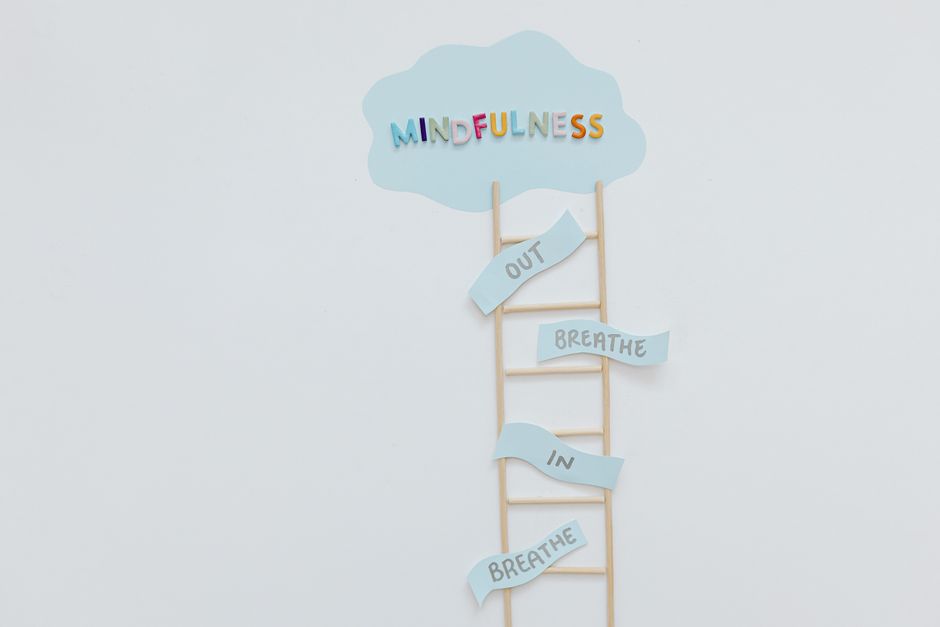
Box breathing is one of the fastest ways to signal safety to a nervous system stuck in overdrive. Inhale through your nose for a count of four. Hold that breath for a count of four. Exhale slowly through your mouth for a count of four. Pause, lungs empty, for a final count of four. Repeat this cycle three times. The extended exhale activates the vagus nerve, which runs from the brainstem to the abdomen and governs the body’s relaxation response. You are essentially sending a direct neurological memo that says, “The threat has passed.”
When panic hits harder, the 5-4-3-2-1 grounding technique pulls your attention out of catastrophic thinking and back into the present moment. Silently name five things you can see. Then four things you can physically feel, like the texture of your chair or the coolness of a ring on your finger. Name three things you can hear, two things you can smell, and one thing you can taste. This sequence forces the prefrontal cortex back online, interrupting the amygdala’s hijack of your rational brain.
The “Task Triage” Method for Overwhelm
High-pressure jobs often create a fog of competing priorities. The Eisenhower Matrix cuts through that fog by sorting tasks into four quadrants: urgent and important, important but not urgent, urgent but not important, and neither urgent nor important. Write your tasks down and place them honestly. Most workplace overwhelm comes from treating everything as urgent and important, which is factually impossible. The act of categorizing alone reduces the cognitive load that fuels stress.
Task-switching is another hidden culprit. Every time you jump from email to spreadsheet to Slack message and back, your brain incurs a switching cost that elevates cortisol. Pick one task from the “important and urgent” quadrant and commit to it for a focused block of time. The “One Thing” rule helps here: identify the single most valuable task you can complete before lunch, and protect that window from interruption. Finishing one meaningful thing builds momentum that scattered multitasking never does.
The Physical Release (Micro-Movements)
Stress hormones like cortisol and adrenaline are designed to fuel physical action. When you sit still in a chair while your body prepares for a fight, those hormones linger and cause damage. Desk stretches targeting the neck and shoulders provide immediate relief. Slowly tilt your right ear toward your right shoulder and hold for fifteen seconds, then switch sides. Roll your shoulders backward in wide circles five times, then forward five times. These movements release the trapezius and levator scapulae muscles, which tighten reflexively under stress.
A five-minute walk, even if it is just around the office floor or down the hallway, resets mental focus more effectively than scrolling through a phone. The bilateral movement of walking engages both hemispheres of the brain, which supports emotional processing and creative problem-solving. Physical movement metabolizes stress hormones literally, breaking them down so they can be excreted rather than stored as tension.
Understanding the “5 C’s” of Stress Management for Work
The “5 C’s” framework offers a structured way to think about resilience, and it directly addresses a question many professionals ask when they feel stuck. The five pillars are Control, Commitment, Challenge, Confidence, and Connection.
Control refers to what you can influence, not what you wish you could dictate. In a workplace context, you cannot control your boss’s mood, a client’s last-minute demands, or a colleague’s communication style. You can control your response, your preparation, your boundaries, and where you direct your attention. Focusing on the sphere of genuine influence shrinks the feeling of helplessness that amplifies stress.
Commitment means staying engaged with your work and your values even when the environment feels difficult. It is the opposite of the withdrawal that characterizes burnout. Challenge involves reframing stressors as opportunities for growth rather than threats to your competence. Confidence is built through small, repeated successes, not through waiting to feel ready. And Connection, the most protective of the five, reminds you that isolation worsens stress while social support buffers against it. This framework is frequently used in cognitive-behavioral coaching and provides a bridge between self-guided techniques and formal therapy.
When Self-Help Isn’t Enough: Choosing the Right Therapy for Work Stress
Self-help strategies are essential first-line tools, but they have limits. When work stress begins to erode your relationships, your physical health, or your sense of identity, professional therapy offers a level of support that techniques alone cannot provide.
Cognitive Behavioral Therapy, or CBT, is the most researched intervention for work-related anxiety. It targets the automatic negative thoughts that fuel imposter syndrome, catastrophizing, and self-doubt. A CBT therapist helps you identify distorted thinking patterns, such as assuming a single mistake will lead to termination, and replace them with more balanced assessments. For professionals whose stress manifests primarily as racing thoughts and perfectionism, CBT is the gold standard.
Mindfulness-Based Stress Reduction, or MBSR, takes a different route. It is particularly effective for people whose stress shows up in the body as chronic tension, headaches, gastrointestinal issues, or a pounding heart. MBSR teaches non-judgmental awareness of physical sensations and emotional states, which reduces the reactivity that keeps the stress cycle spinning. Dialectical Behavior Therapy, or DBT, may be a better fit if emotional regulation is the primary struggle, such as frequent outbursts of anger or tearfulness at work that feel out of proportion to the trigger.
When searching for a therapist in Milwaukee, look for credentials such as Licensed Clinical Social Worker, or LCSW, Licensed Professional Counselor, or LPC, or a licensed psychologist. During an initial call, ask directly about their experience treating workplace stress and whether they incorporate CBT, MBSR, or DBT into their practice. A good therapist will welcome these questions and answer them clearly.
Your 2026 Guide to Work Stress Management Milwaukee Resources
Top-Rated Clinics and Providers
Milwaukee offers several established clinics for those ready to seek professional support. Stress Management and Mental Health Clinics operates as a comprehensive behavioral health provider with psychiatrists, psychologists, LCSWs, and LPCs on staff. Their Healthy Thinking Center is a distinctive facility dedicated to education about healing and personal growth, which sets them apart from standard outpatient clinics. Online reviews are mixed, with a 2.3-star average from a small sample of reviews, so it is wise to schedule an initial consultation and assess the fit for yourself rather than relying solely on aggregated ratings.
American Behavioral Clinics has been voted Milwaukee’s top psychiatrist and maintains a detailed taxonomy of stress categories, including a specific designation for work stress. This level of specialization suggests that their clinicians are accustomed to treating the exact pressures that high-performing professionals face. They offer medication management, individual therapy, and group therapy options.
One actionable step that many people skip is calling ahead to ask about sliding scale fees and which insurance plans are accepted. Cost transparency remains a gap in the local mental health landscape, and a five-minute phone call can save you from unexpected bills later.
Free and Low-Cost Safety Nets in Milwaukee
The city of Milwaukee maintains a network of free and low-cost mental health resources that every resident should know about. The Mental Health Emergency Center operates 24 hours a day, 7 days a week, 365 days a year, providing immediate crisis intervention for anyone experiencing severe emotional distress. You do not need an appointment, and you do not need insurance.
NAMI Southeast Wisconsin offers peer-led support groups that are not clinical in nature but provide the Connection pillar of the 5 C’s in a structured, welcoming environment. These groups are run by people who have lived through mental health challenges themselves, which creates a different kind of safety than a therapist’s office.
The UpliftWI Warmline is a particularly valuable resource for professionals who are not in crisis but need someone to talk to. Staffed by certified peer specialists with lived experience, this line offers a non-clinical first step for those who feel isolated or overwhelmed but are not ready for formal therapy. And the 988 Suicide and Crisis Lifeline is available for any mental health crisis, not only suicidal thoughts. If you are at a breaking point, call or text 988.
Preventing Burnout: A Long-Term Strategy for the Milwaukee Worker
Managing stress is about navigating the present moment. Preventing burnout requires structural changes that protect your future self. The most effective boundary you can set involves work communication after hours. Turn off email notifications and Slack alerts on your phone when your workday ends. The world will not collapse, and the people who matter will learn to respect your limits if you enforce them consistently.
Sleep hygiene and regular exercise are not optional accessories to stress management. They are the foundation. Sleep is when the brain clears metabolic waste and consolidates emotional learning. Exercise provides the physical outlet that stress hormones demand. Treat both as non-negotiable appointments with yourself, scheduled and protected like any meeting with a client.
Frequently Asked Questions About Work Stress Management Milwaukee
How do I destress from a stressful job immediately?
Use box breathing paired with the 5-4-3-2-1 grounding technique. Together, these methods calm the nervous system within two to three minutes and can be done at your desk without drawing attention.
What is the best therapy for work stress?
Cognitive Behavioral Therapy is the most researched and widely recommended approach for work-related anxiety and negative thought patterns. Mindfulness-Based Stress Reduction is an excellent alternative if physical symptoms like tension and insomnia are your primary concern.
What do I do when stress at work is too much?
If you feel you are at a breaking point, the Milwaukee Mental Health Emergency Center is open 24/7 and provides immediate crisis intervention. You can also call or text 988 to speak with a trained crisis counselor at any hour.
Are there free stress management resources in Milwaukee?
Yes. NAMI Southeast Wisconsin runs peer support groups at no cost, the UpliftWI Warmline offers free peer listening, and Access Clinics provide services for uninsured residents. The city government website maintains an updated list of these resources.
Final Takeaway
Managing work stress is a skill you build, not a flaw you fix. The pressure you feel is not evidence of inadequacy. It is a signal that your mind and body need attention, and that attention is something you can learn to give. Pick one technique from this article, whether it is box breathing, the task triage method, or a call to a Milwaukee warmline, and try it today. Solace Grove is here to help you navigate the path from overwhelmed to in control, one intentional step at a time.