
What Actually Happens in Group Therapy (And Why It Works)
2026-06-30 · Solace Grove Behavioral Health
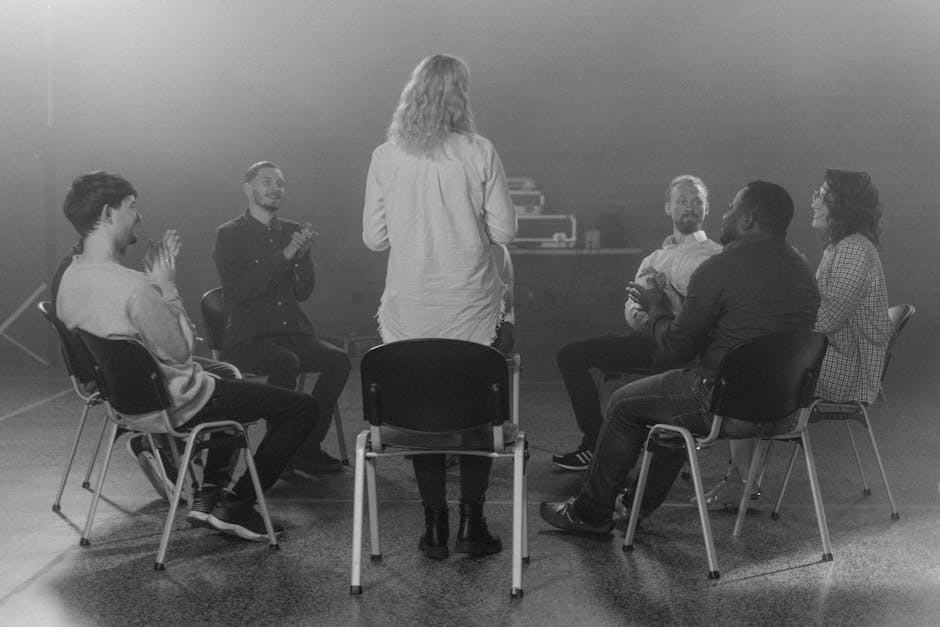
The fear of the unknown is the single biggest barrier that keeps people from walking into a group therapy room. You might picture a circle of strangers, forced vulnerability, or something resembling a television depiction that bears little resemblance to reality. Group therapy is none of those things. It is a structured, evidence-based clinical intervention led by a trained professional, and it follows a predictable, supportive rhythm designed to make healing possible. This article walks you through the exact process, from the first phone call to the final session, so you know what to expect and why group therapy is as effective, and often more affordable, than individual therapy. For Milwaukee residents weighing their options, group therapy offers a powerful path to healing that is often overlooked.
Table of Contents
- The First Step: The Initial Consultation (What Happens Before You Join)
- Session 1: Meeting the Group and Setting the Rules
- The Middle Sessions: Building Trust and Doing the Work
- Why It Works: The Science Behind Group Therapy
- Group Therapy vs. Individual Therapy: Which Is Right for You?
- What to Expect When the Group Ends (Long-Term Outcomes)
- Finding Group Therapy in Milwaukee, Wisconsin
- Frequently Asked Questions About Group Therapy
- The Courage to Try
The First Step: The Initial Consultation (What Happens Before You Join)
Before you ever sit in a circle with other members, you will meet one-on-one with the therapist who leads the group. This initial consultation typically lasts 30 to 60 minutes and serves as a thorough intake session. The therapist will ask about your personal history, current struggles, treatment goals, and any previous experience with therapy. This is not a test you can fail. It is a conversation to determine fit.

Some therapists use a formal assessment tool called the Group Readiness Questionnaire to gauge whether you are prepared for the interpersonal demands of a group setting. This helps identify if you are likely to benefit from the format or if individual therapy might be a better starting point. You will also be matched based on factors like diagnosis, age range, and the type of group available. During this consultation, you will learn practical details: the group size, which typically ranges from seven to ten members, the session length of 60 to 120 minutes, and the confidentiality rules that govern everything that happens inside the room. By the time the consultation ends, you will have a clear picture of what lies ahead.
Session 1: Meeting the Group and Setting the Rules
Walking into your first group session can feel daunting, but the environment is intentionally designed to reduce pressure. Chairs are arranged in a circle so everyone can see one another. There is no hot seat, no spotlight waiting to expose you. The therapist facilitates the conversation, but the group collectively owns the space.
The first topic of discussion is always confidentiality. The therapist explains that while they are legally bound to protect your privacy, group members are asked to agree to a verbal contract of mutual privacy. What is shared in the room stays in the room. This agreement is the foundation on which trust is built. After that, the group typically does a check-in. Each person shares their name and a brief statement about why they are there, though anyone may pass if they are not ready to speak. The therapist will explicitly address the discomfort that comes with a first session, validating that feeling exposed or hesitant is completely normal. That acknowledgment alone often eases the tension in the room.

Open vs. Closed Groups: What’s the Difference?
Not all groups operate the same way, and understanding the format helps set expectations. Closed groups consist of the same members attending every week for a set number of sessions, such as 12 weeks. This structure builds deep trust over time and is often preferred for trauma work or grief processing. Open groups allow new members to join at any point, which is common in ongoing support settings like substance use recovery. Closed groups offer more safety and predictability, while open groups offer flexibility for busy schedules. Your therapist will help you decide which format fits your needs.
The Middle Sessions: Building Trust and Doing the Work
After the first few sessions, the real work begins. Early meetings focus on trust-building, what researchers call the forming stage. Members are polite, cautious, and still learning the group’s rhythm. As weeks pass, the group moves into deeper territory. This is when vulnerability increases, and sometimes conflict emerges. These middle stages, known as storming and norming, are where the most significant growth happens.
A typical middle session unfolds like this: a member shares a struggle they are facing, whether it is a conflict with a partner, a wave of anxiety, or a setback in recovery. The therapist guides the group to respond not with advice but with feedback, support, or personal reflection. Someone might say, “That reminds me of a time I felt the same way,” or “I notice you shut down when you talk about your boss.” These observations, offered by multiple people, create a mirror that individual therapy cannot replicate. The single most powerful moment in group therapy is when a member realizes they are not alone in their pain. This universal experience reduces shame and isolation in ways that words alone cannot describe.
Many groups also incorporate structured skill-building exercises, especially those grounded in cognitive behavioral therapy. You might role-play a difficult conversation, practice assertiveness techniques, or track thought patterns between sessions. These exercises translate directly to life outside the room.
What About Conflict? (Addressing the Drawbacks)
Conflict between members is not a sign that group therapy has failed. It is a training ground for real-world relationships. Disagreements will arise, and when they do, the therapist intervenes to keep the exchange productive rather than destructive. Members learn to express frustration, set boundaries, and repair ruptures in a contained environment. Privacy concerns are another common worry. Unlike individual therapy, the group hears your story, and that carries risk. However, a strong confidentiality agreement and established group norms significantly reduce that risk. Most members find that the benefits of shared experience far outweigh the vulnerability of being known.
Why It Works: The Science Behind Group Therapy
Group therapy is not just a feel-good gathering. It is backed by decades of clinical research. A 2021 meta-analysis of 329 studies confirmed that group therapy is as effective as individual therapy for a wide range of conditions, including depression, anxiety disorders, PTSD, OCD, substance use disorders, and chronic pain. The evidence is clear and robust.
The economic argument is equally compelling. According to a 2023 report from the American Psychological Association, if just 10 percent of unmet mental health need in the United States were met with group therapy instead of individual therapy, 3.5 million more people could receive care, saving over $5.6 billion and requiring nearly 35,000 fewer new therapists. Group therapy is not just clinically effective. It is a scalable solution to a national access crisis.
Beyond the data, there is a biological truth at play. Humans are wired for connection. Group therapy leverages our innate need for belonging, activating the social brain in ways that individual therapy cannot replicate. You also receive feedback from seven to ten people rather than a single therapist, which provides diverse perspectives and accelerates insight. One member might notice a pattern another misses. That feedback multiplier is unique to the group format.
Group Therapy vs. Individual Therapy: Which Is Right for You?
Both formats work, but they serve different purposes. Cost is one practical distinction. Group therapy is typically 30 to 50 percent cheaper per session than individual therapy. In Milwaukee, this can mean paying $30 to $60 per session for a group compared to $100 to $200 for individual work. Insurance often covers group sessions, and many practices offer sliding-scale fees.
Individual therapy offers deep, private focus on your specific history and inner world. Group therapy offers breadth of perspective and a live laboratory for practicing social skills. For shame-based issues like addiction, eating disorders, and social anxiety, group therapy often excels precisely because isolation is a core part of the problem. Hearing others name the same hidden thoughts strips shame of its power. Many people choose to do both, using individual therapy for trauma processing and group therapy for relational practice and ongoing support.
What to Expect When the Group Ends (Long-Term Outcomes)
A well-run group does not simply stop meeting without closure. The final session is dedicated to reviewing progress, saying meaningful goodbyes, and creating a relapse-prevention plan. Members reflect on where they started and acknowledge the growth they have witnessed in one another. Research suggests that the social skills and self-awareness gained in group therapy often continue to improve after the group ends. The relationships formed, even if they do not extend beyond the room, leave a lasting imprint. Many members transition to alumni groups, ongoing individual therapy, or a new group with a different focus.
Finding Group Therapy in Milwaukee, Wisconsin
If you are in the Milwaukee area and curious about group therapy, options are available. Solace Grove offers group therapy for anxiety, depression, and life transitions, with groups designed to meet you where you are. Many group sessions are covered by insurance, and it is worth checking your out-of-network benefits or asking about sliding-scale fees if cost is a concern. For those in Wisconsin outside Milwaukee, virtual group therapy provides the same structure and effectiveness from home. The first step is often a free 15-minute consultation to discuss which group might fit your needs. You can explore more about local support through the Wellness Library, which offers resources on mental health and recovery.
Frequently Asked Questions About Group Therapy
Does group therapy actually work? Yes. A 2021 meta-analysis of 329 studies confirms it is as effective as individual therapy for most conditions, including depression, anxiety, PTSD, and substance use disorders.
What are the five stages of group therapy? Based on Tuckman’s model, groups typically move through Forming, Storming, Norming, Performing, and Adjourning. Each stage serves a distinct purpose in building cohesion and deepening the work.
What are the drawbacks? The main risks include difficulty opening up, feeling overwhelmed by the group dynamic, conflict with other members, and privacy concerns. These risks are manageable and often become part of the therapeutic process itself.
Can I switch to individual therapy later? Absolutely. Many clients start with individual therapy and transition to a group, or move from group to individual work as their needs change. The formats are complementary, not mutually exclusive.
The Courage to Try
Group therapy is a structured, evidence-based, and cost-effective way to heal. It is not a lesser alternative to individual therapy. It is a distinct and powerful modality with its own mechanisms of change. The fear of judgment that keeps people away is almost always worse than the reality of being in the room. Most members report wishing they had joined sooner. If you are in Milwaukee or anywhere in Wisconsin and have been wondering whether group therapy might help, the door is open. Taking the first step is the hardest part, and you do not have to take it alone.