

You can explain that therapy is a personal step toward your own well-being, not a verdict on the relationship. Asking for support means you want to feel more like yourself again. That kind of growth often benefits both partners. The conversation is a request for understanding, not an accusation.
Table of Contents
- Why does my partner react defensively when I bring up therapy?
- How can I start the conversation without blaming my partner?
- What should I say if my partner thinks therapy means our relationship is broken?
- How do I explain the difference between individual therapy and couples therapy?
- What if my partner still refuses to go to therapy with me?
- How can Solace Grove support me if my partner is hesitant about therapy?
- How long do couples usually wait before getting help, and does it matter?
- What if my partner says therapy won't work for us?
- Key Takeaways
- References
Why does my partner react defensively when I bring up therapy?
A defensive reaction is usually fear, not rejection. According to Empathi, a partner who resists therapy is almost never making a calculated choice to abandon your pain. They are often simply terrified.

The Empathi article describes a pattern called the Waltz of Pain. One partner pursues connection by raising the topic of therapy. The other partner perceives therapy as a threat and withdraws. This push and pull can feel confusing, but it is a common dynamic.
Relationships are systems. When one part of a system shifts, the whole system has to respond. That response can feel destabilizing at first. Defensiveness is a normal human reaction to a perceived threat. It does not mean your partner has failed or that the relationship is broken.
How can I start the conversation without blaming my partner?
Use statements that focus on your own feelings and needs. According to Televero Health, therapist Dr. Jenny C. Yip suggests saying something like, "This is why I'm feeling it's needed." That phrasing keeps the focus on your experience.
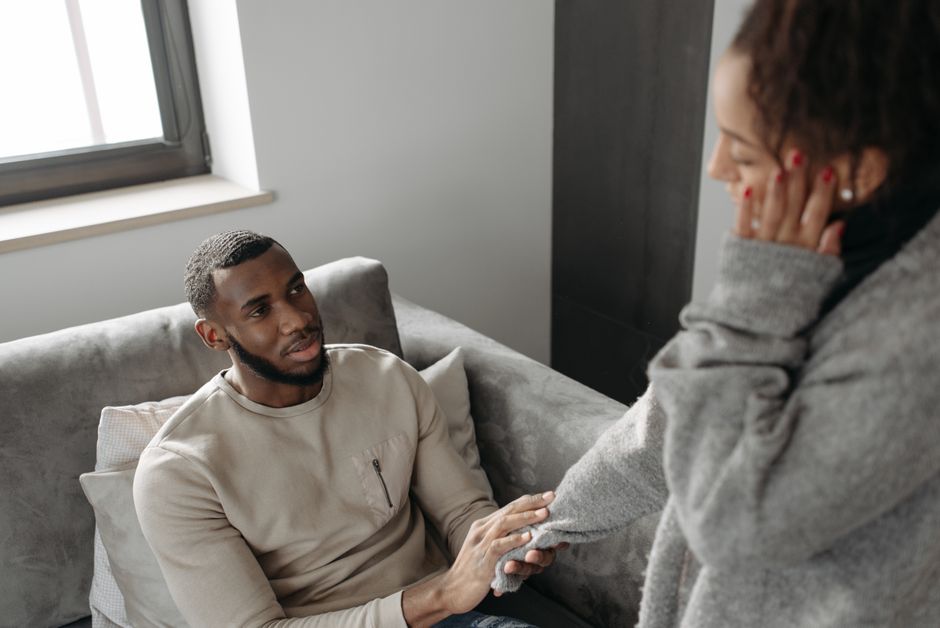
Choose a calm, private moment. Do not bring up therapy during an argument or when either of you is rushing. A quiet conversation gives both people room to listen.
Describe the specific struggles you are navigating. You might mention feeling overwhelmed, stuck, or weighed down by stress. Frame therapy as a tool for your own growth. Avoid language that points a finger at your partner. The goal is to invite support, not assign fault.
What should I say if my partner thinks therapy means our relationship is broken?
Clarify that seeking help early is a sign of care, not failure. According to Sentio Counseling Center, most couples wait an average of six years after problems begin before seeking professional help. Waiting often makes patterns feel harder to shift.
The same source reports that 68 percent of cohabiting couples believe it is best to start therapy before serious problems develop. Yet only 18 percent actually do. Wanting support now means you are choosing a different path.
Therapy is a tool for strengthening connection. It is not evidence that the relationship is damaged beyond repair. Many couples report positive outcomes. A 2023 survey by Verywell Mind found that 99 percent of couples currently in therapy reported that it had a positive impact on their relationship, according to Sentio Counseling Center.
How do I explain the difference between individual therapy and couples therapy?
Individual therapy is personal work. Couples therapy is relational work. Making that distinction clear can help your partner understand that you are not blaming them.
Individual therapy can address personal stress, anxiety, or a season of feeling stuck. That kind of personal work often benefits the relationship indirectly. When you feel more grounded, your interactions may feel lighter.
According to Quora contributor Mike E. King, couples counseling can sometimes reveal more serious individual issues. In those cases, a referral can be made to a psychotherapist. The two forms of support can work side by side.
You are asking for support for yourself. You are not demanding that your partner change. That framing can lower the temperature of the conversation.
What if my partner still refuses to go to therapy with me?
You can still begin individual therapy on your own. According to Quora contributor Mike E. King, counseling is not always successful when one or both partners are not fully committed. Forcing participation rarely works.
Your own growth may shift the relationship dynamic over time. When one person changes how they respond, the system around them often adjusts. That shift can open a door later.
Keep the door open by revisiting the conversation without pressure. You cannot force participation. But you can model what seeking help looks like. That quiet example can be more powerful than repeated requests.
How can Solace Grove support me if my partner is hesitant about therapy?
Solace Grove Behavioral Health offers Individual Therapy for adults working through anxiety, depression, trauma, or a season of feeling stuck. Sessions are available in person in Milwaukee and by telehealth across Wisconsin. Individual therapy can be a first step for you to find clarity and relief, without requiring your partner to participate.
Family Therapy is also available to ease conflict and rebuild communication when a loved one is struggling. Those sessions can happen in person or by telehealth. If medication support feels right for you, Psychiatric Medication Management can be coordinated with your therapy so the whole plan works together.
Solace Grove provides outpatient care rather than 24-hour emergency services. If you or someone you know is in crisis, the 988 Suicide & Crisis Lifeline offers immediate support.
How long do couples usually wait before getting help, and does it matter?
Most couples wait an average of six years after problems begin before seeking professional help, according to Sentio Counseling Center. Dr. Gottman's research highlights the same six-year average, according to Televero Health.
Waiting matters because patterns can become deeply entrenched. Early support often feels more manageable than untangling years of built-up hurt.
The outcomes are encouraging. Research from the American Association of Marriage and Family Therapists shows that after completing couples therapy, approximately 90 percent of clients report improvements in emotional well-being. Over 75 percent experience greater satisfaction in their relationships, according to Sentio Counseling Center.
What if my partner says therapy won't work for us?
The evidence suggests therapy can help many couples. According to Sentio Counseling Center, Emotionally Focused Therapy has shown a 70 to 75 percent recovery rate for couples in distress in multiple studies. Approximately 90 percent of couples show significant improvement.
Therapist skill level is one of the strongest predictors of client outcomes. It matters more than years of experience alone, according to Sentio Counseling Center. Finding the right therapist matters more than the idea of therapy itself.
Therapy is a process, not a quick fix. Progress takes time. A partner who expects instant results may need to hear that change often happens in small, steady steps.
Key Takeaways
- Most couples wait an average of six years after problems begin before seeking professional help.
- A partner who resists therapy is often terrified, not making a calculated choice to abandon your pain.
- Using "I" statements like "This is why I'm feeling it's needed" reduces blame and defensiveness.
- 99 percent of couples currently in therapy reported that it had a positive impact on their relationship.
- Only 18 percent of cohabiting couples actually start therapy before serious problems develop, even though 68 percent believe it is best.
- Relationships are systems; when one part shifts, the whole system has to respond.
- Solace Grove Behavioral Health offers individual therapy as a personal first step, available in person in Milwaukee and by telehealth across Wisconsin.
References
- How to Talk to Your Partner About Going to Therapy — Sentio Counseling Center, June 12, 2025
- How to Talk to Your Partner or Family About Starting Therapy — Televero Health
- My Partner Won't Go to Therapy. Here's What Actually Works — Empathi, September 5, 2026
- How do I explain to my partner that I need therapy without them thinking our relationship is the problem? — Quora
Support is available.
Connect with Solace Grove to explore care shaped around your goals.
Book Appointment